
This article describes composing multilingual questionnaires. For switching the language of the Survey Solutions software itself and supported languages refer to the localization overview article.
Often times researchers work in contexts where respondents of a survey speak different languages. Therefore, to administer surveys and collect higher quality data it is important to have questionnaires in the corresponding language. You can create multilingual questionnaires in Survey Solutions Designer by following the steps listed below.
Note that it’s easier to follow them when the questionnaire development is fully completed in the original language, but Survey Solutions allows updating existing translations as well.
Click the translation button in the advanced instrument panel on the left:
 . If no translations were provided
earlier, you will only see a card with translation “Original” there,
which is marked as
. If no translations were provided
earlier, you will only see a card with translation “Original” there,
which is marked as default.Click the link
Get Template for Excel (XLSX). This will download a spreadsheet file in XLSX format that can be opened with Microsoft Excel, Open Office Calc, and other compatible applications.Open this file and locate the sheet “Translations”. It contains the following columns:
- “Entity Id”,
- “Variable”,
- “Type”,
- “Index”,
- “Original text”
- “Translation”.
The translator should take values from “Original text” as input and write the translated version of it into the corresponding cell in the “Translation” column:
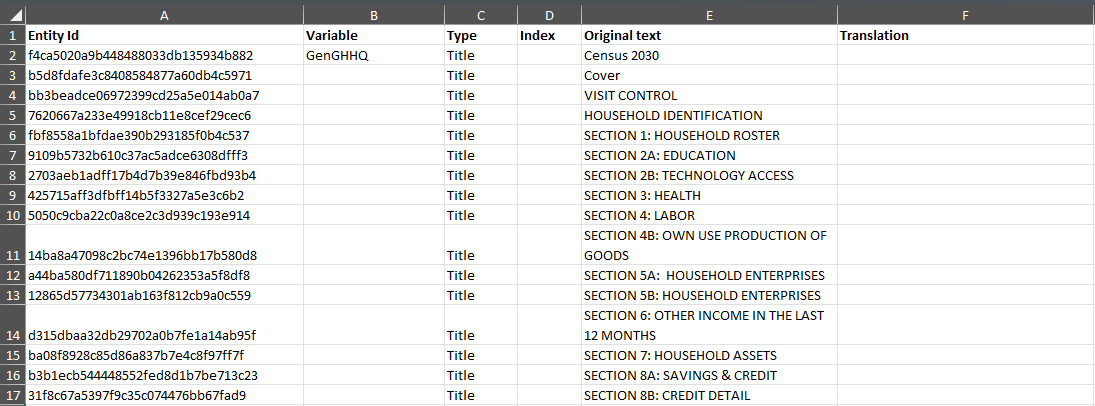
Values in any other cells of the sheet should not be modified! This includes the original content being translated. Any corrections to the original text need to be done through the Designer’s interface, not in any translation file.
Answer options for reusable categories/classifications are placed in their own dedicated sheets. The name of each such additional sheet is formed with a special marker “@@_”. These sheets have the same columns and must also be translated.
After the translation has been completed, save the file. While it is normally expected that the translation file is complete (all original texts are translated to the target language) it is possible to leave some values untranslated. In that case text from the “Original text” column will be used in Survey Solutions.
Switch back to Questionnaire Designer and in the translation panel click Upload New Translation. Select your saved file to upload as a new translation. Designer will indicate number of translated strings it retrieved from the uploaded file.
Now specify any desired name to appear in the language selector for interviews in CAPI and CAWI modes:
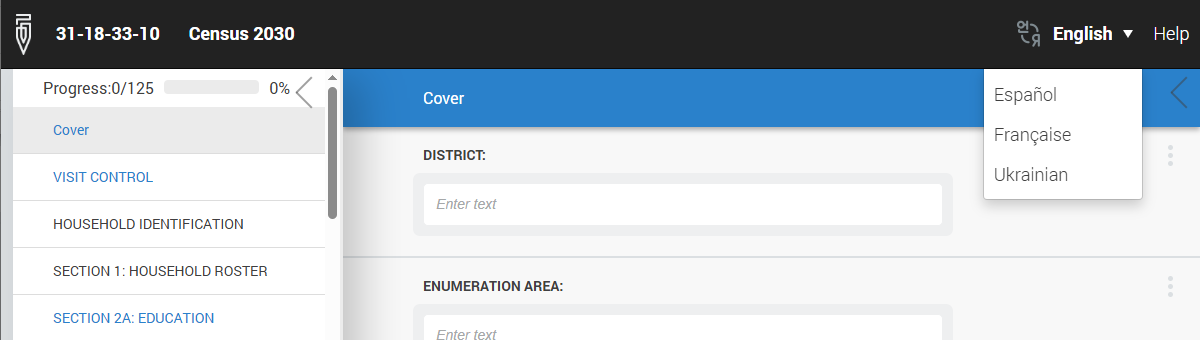
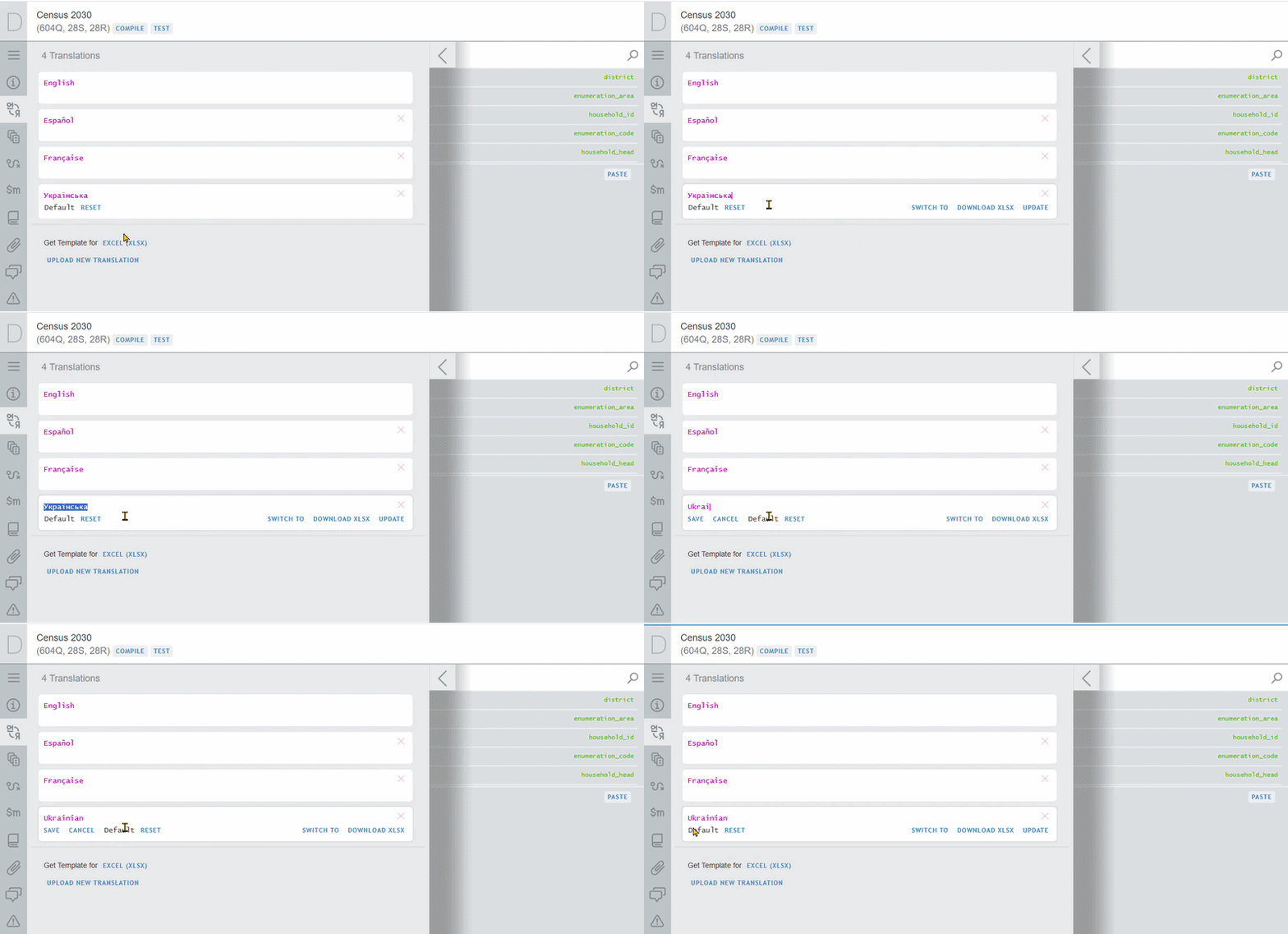
Uploaded translations can be:
deleted: by clicking the red cross button on the translation card; the original card (top) can’t be deleted.
renamed: by clicking on the translation name and revising it, then preserving the changes with the
SAVEbutton (see how).updated: by clicking the
Download XLSXlink on the translation card, and then re-uploading the updated file with theUpdatebutton.(Note that the uploaded file fully substitutes the corresponding translation uploaded earlier).
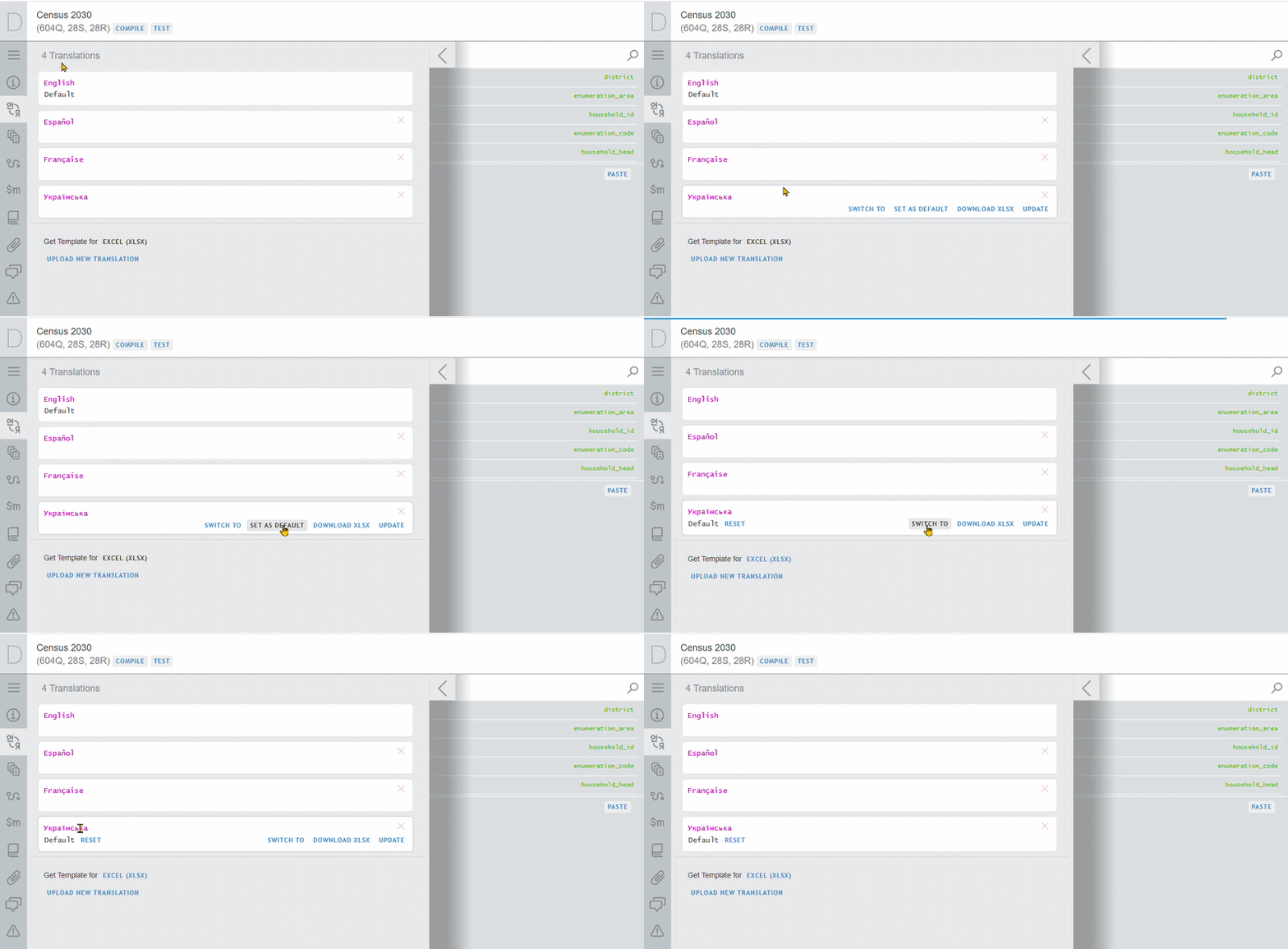
You may also:
set a default language for the survey, which is the translation that applies to the new interviews started from an assignment. It can differ from the language visible in the Designer’s interface (see how).
switch the language visible in the Designer by clicking
SWITCH TOon any translation’s card. Note that for a switch that translation must be complete, meaning not having any not translated text!. If the original translation was not renamed by you, its card will have a blank name which will need to be filled in appropriately.
While translating the text keep in mind the following:
HTML tags may be present in the original text to reflect desired text formatting and normally should be preserved in the translation to achieve equivalent formatting of the content.
Hyperlinks may be present in the original text in which case the text of the link is translated and the target typically remains the same.
Text substitution may be utilized, in which case it should be preserved intact.